Over the past decade, the vision of self-driving taxis ferrying passengers across busy city streets has captured global attention. Tech companies, automakers, and policymakers alike have positioned robotaxis as a cornerstone of the future of urban transportation. Cities such as San Francisco, Beijing, and Shanghai have become prominent testing grounds where autonomous fleets are being trialed under real-world conditions. Supporters claim these vehicles promise safer, cheaper, and more efficient travel, while critics argue the technology is still immature and overhyped. The truth likely lies somewhere between: robotaxis are an impressive technological achievement, but they face formidable challenges before they can be considered a true revolution in urban mobility.
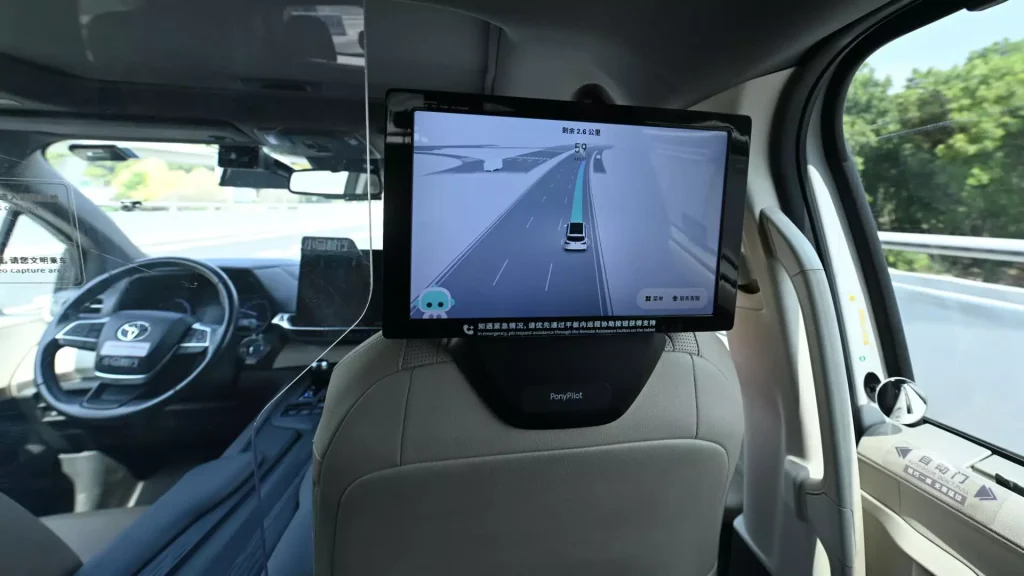
Limited Deployment and Early-Stage Adoption
At present, robotaxis remain confined to small-scale pilots. Companies such as Waymo, Cruise, Baidu, and Pony AI showcase their fleets in carefully chosen districts with favorable regulations and infrastructure. These programs are tightly controlled, with specific routes, limited service hours, and ongoing human oversight. Compared to the millions of daily rides in megacities, the number of autonomous trips is tiny.
The restrictions highlight how far the industry is from mainstream adoption. While headlines often imply imminent disruption, the reality is that regulatory uncertainty, uneven infrastructure, and technical limitations prevent widescale rollout. Autonomous fleets today function more as demonstrations of capability than practical alternatives to taxis, ride-hailing, or private vehicles.
Economics: Cost Savings vs. Real Profitability
The economic case for robotaxis rests heavily on cost efficiency. Baidu’s Apollo RT6, for example, is priced around \$37,000, significantly cheaper than Waymo’s vehicles, which can exceed \$200,000. This gap suggests that large fleets may one day be affordable enough to compete with traditional transport.
Yet, vehicle price is only one part of the equation. Insurance costs, software updates, high-precision mapping, and liability expenses remain substantial. Even minor incidents without injuries can generate legal disputes, erode public confidence, and inflate operational costs. The assumption that scaling up production will automatically deliver profitability overlooks these long-term challenges.
International expansion complicates matters further. While China has aggressively promoted autonomous driving through favorable policies and rapid infrastructure deployment, Europe’s stringent safety regulations and data privacy laws pose steep hurdles. In regions like the Middle East, infrastructure readiness and cultural acceptance present additional uncertainties.
Safety: The Defining Barrier
If economics is one obstacle, safety is the defining challenge. Robotaxis promise to reduce accidents caused by human error, but for now, their safety record remains mixed. Unexpected pedestrian behavior, unusual road conditions, and sensor blind spots continue to cause incidents. Each accident—whether minor or serious—risks eroding public trust and sparking regulatory crackdowns.
The industry’s drive to lower costs can exacerbate these concerns. If manufacturers prioritize rapid expansion and cheaper vehicles over exhaustive safety validation, the risk of accidents grows. Public opinion could quickly turn negative, slowing or even halting adoption. To succeed, robotaxi companies must prove—not merely claim—that their vehicles are consistently safer than human drivers.
Political, Regulatory, and Cultural Realities
Beyond economics and safety, robotaxis must navigate political and cultural landscapes. Governments face the difficult task of fostering innovation while protecting the public. China’s top-down model enables fast trials, while the U.S. relies on fragmented local and state regulations. In Europe, strong consumer protection norms slow progress but also create a higher bar of trust if vehicles are eventually approved.
Cultural attitudes also play a crucial role. In some societies, automation is embraced as progress, while in others, skepticism and job-loss concerns dominate. Taxi drivers, labor unions, and insurance industries may resist widespread deployment. Policymakers must balance economic opportunity with protecting employment and ensuring fair competition.
Toward a Balanced Perspective
Robotaxis today are both promising and problematic. They demonstrate the remarkable progress of artificial intelligence, robotics, and automotive engineering. Yet they remain expensive, heavily regulated, and viewed cautiously by the public. Their path to becoming a common feature of urban mobility is long and uncertain.
Instead of focusing solely on hype, industry leaders and policymakers should adopt a measured approach. This means prioritizing proven safety, fostering public trust, and crafting regulatory frameworks that allow for innovation without compromising accountability. International expansion should be pursued carefully, recognizing that different markets demand different strategies.
Conclusion: Hype Meets Reality
The story of robotaxis is not one of imminent revolution, but of incremental progress. While companies promote falling costs and expanding fleets, the industry still faces unresolved issues in safety, economics, and regulation. Robotaxis are unlikely to replace human-driven transportation in the immediate future, but they could gradually reshape mobility if innovation is paired with responsibility.
In short, the hype is not entirely misplaced—autonomous taxis may one day transform urban life. But until they demonstrate profitability, reliability, and safety at scale, they remain a fascinating experiment rather than a guaranteed revolution.